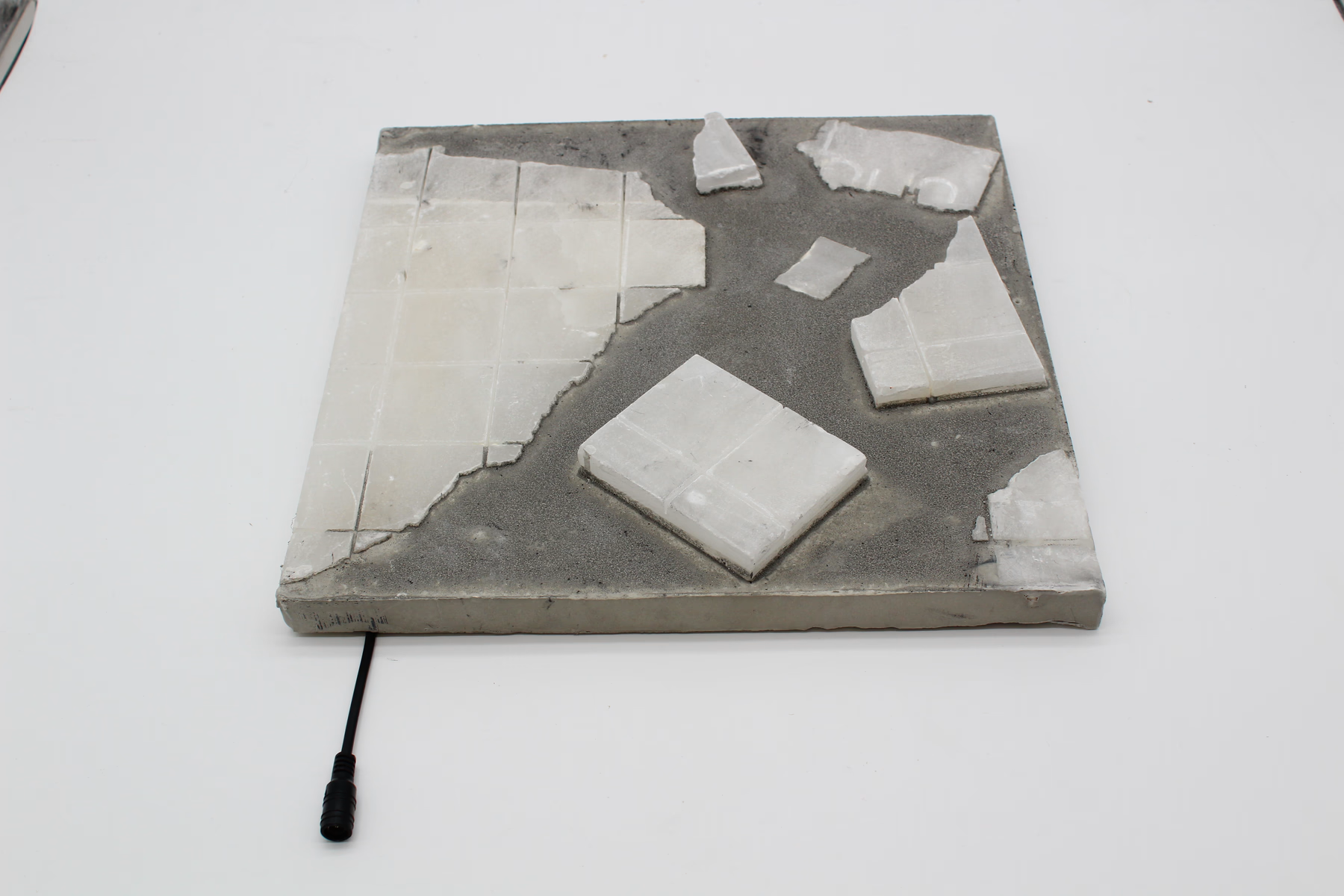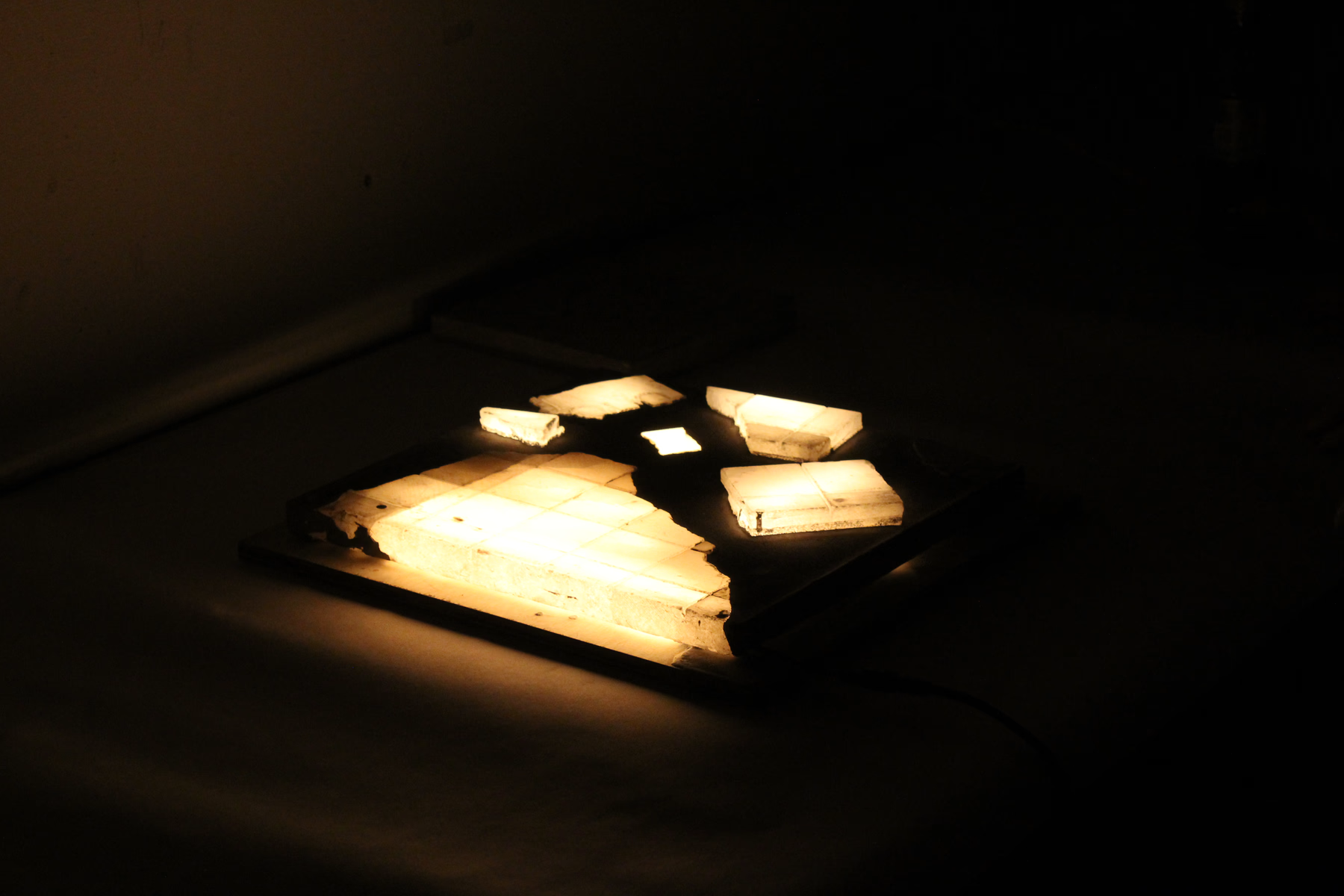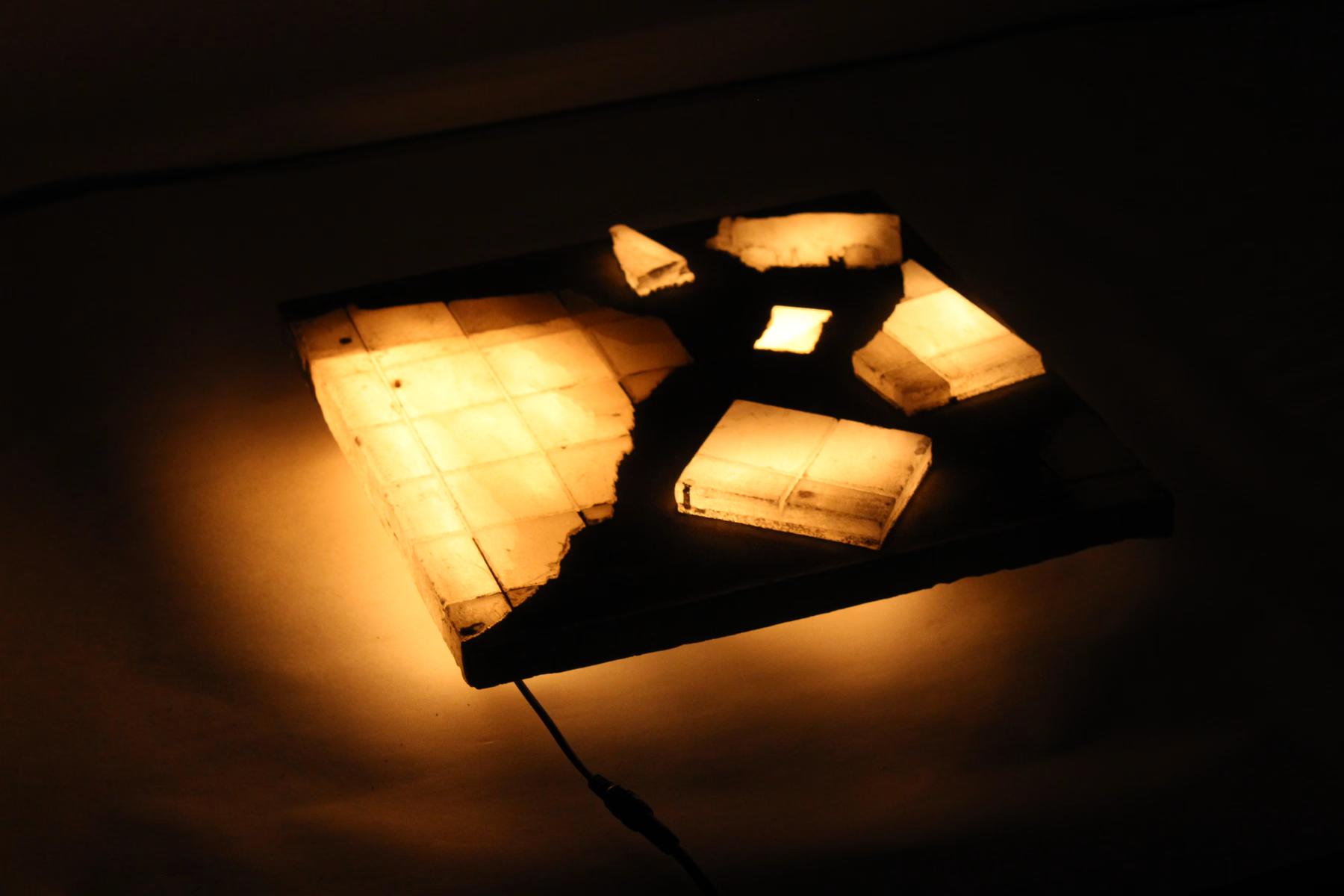
What is old is new again. The topic sent my mind in a million directions: I could take things considered old, refuse, debris, discarded items, and manufacture a light with a story about sustainability. I thought about embodying a bygone design movement and crafting a lamp with nods to previous designers and eras. But those were not personal. I knew I wanted uplighting. I've been thinking a lot about the direction of light in our houses, always down. Desk lamps shine on your desk and floor lamps illuminate from an elevated position. Overhead, pendant lights, chandeliers, and sconces illuminate a space as efficiently as possible, down, where furniture and all objects bound by gravity exist, creating hazards for ambling masses. Light shone downward imposes awareness, proper indexing contents of the floor. But what of uplighting? For the last thirty-thousand years, we have had artificial light. With the invention of firestarting, humans were no longer bound to the diurnal cycle. We had broken free from our greatest fear: night. A bundle of organic material and two sticks was enough to keep a tribe safe, warm, and healthy (through cooking). These fires, with the exception of torches, were built on the ground, around which people would circle, alit from below. For thousands of years, all artificial light cast its yellow-amber rays at an upward angle. It was distinct from the sun in that way. The sun signaled a activity, a fire signaled assembly. Uplighting at the center of an encircled group. We think fondly of these moments. Campfires as children, fireplaces, but rarely and electrical source. With cords, it's more economical to wire through the walls and ceilings. And because of this constraint, centerpiece lighting has fallen out of favor. Light is comfort. The oldest artificial human-made light, fire, sat in pits and caves, some of the oldest human shelters, casting light and head onto the encircled people. The light lit from below, opposite of natural light which always lights from above. Distinctly human light. Our homes have light from above and from aside, better for things like light efficiency in illuminating a broad space and easier for wiring. Floor space is also a premium, forcing the grounded lights to adopt tall, slender, treelike forms to stay clear of foot traffic and maximize wedgibility in cramped quarters. The Lazarus lamp also took inspiration from elsewhere. In my hometown, San Francisco, California, blocks away from the psychedelic revolution wellspring at Haight and Ashbury, sits the oldest park in San Francisco. Buena Vista Park sits canted north on a chert hill, overgrown with Monterey Cyprus and Live Oak. Its twisting paved trails cut into the hillside as they wind to the peak. And imbedded in the gutters and retaining walls running parallel the road, thousands of gravestones, shattered and inset in rough concrete. The epitaphs visible for some, "-ied 186-" or "& fath-", evoking partial tragedies as one attempts to get their steps in. These stones came from one of the local cemeteries which interred the dead within city limits until the 1930s when city politicians decided to exhume 10 of the 13 graveyards, 130,000 bodies, to free space for city development. For efficiencies sake, most of the bodies were reinterred into a mass grave. Next-of-kin who wished to spare their deceased family members from this fate were charged for the transportation of any memorial monuments, like headstones and statues, and for a new private burial plot. If payment was not received, and often it was not due to the depressed economic times, the headstones were forfeited to the Department of Public Works to be used as building material for pennies each. The DPW, using money from President Franklin Delano Roosevelt's Works Progress Administration, formalized trails and retaining walls in Buena Vista using these foregone marble monuments, creating jobs for out-of-work Americans and effectively turning what was old stone into new park for the enjoyment of the living. My light started with the alabaster. I saw a hearth in a Pennsylvania state carved from a piece of alabaster, with walls so thin the light from inside shone through. I also took inspiration from the Yale Beinecke Rare Book and Manuscript Library, whose Vermont Danby marble walls double as panes to let in only a golden glow of sunlight in an effort to protect the old books within. For my table lamp, Alabaster chunks engraved with a lattice, shattered into pieces and set at varying heights into concrete, evoking the shattered stones embedded in the gutters of Buena Vista Park. The light refracting through the the fragments is warm, contrasting against the cold permanence of concrete. 2500 kelvin COB LED strips trace the back of the light and provide an amber eminence, akin to the glow of a campfire. The light, cast upward and all around, illuminates guests seated around the table, triggering a campfire response, soothing nerves and encouraging mirth. The name Lazarus comes from the 1915 T.S. Eliot poem, "The Love Song of J. Alfred Prufrock" wherein a man laments on a life misspent and yearns for another chance. In a line, he invokes Lazarus, the biblical figure, who came back from the dead. And would it have been worth it, after all, After the cups, the marmalade, the tea, Among the porcelain, among some talk of you and me, Would it have been worth while, To have bitten off the matter with a smile, To have squeezed the universe into a ball To roll it towards some overwhelming question, To say: "I am Lazarus, come from the dead, Come back to tell you all, I shall tell you all"- If one, settling a pillow by her head Should say: "That is not what I meant at all; That is not it, at all." To me, it embodies the prompt and the narrative of my light. It is meaningful to take what has been set in stone, break it, and create something new from it.